2026 Best Structural Steel and Plate Fabrication Suppliers
Choosing the right supplier matters when steel becomes the backbone of a bridge, plant, warehouse, or heavy equipment platform. This 2026 guide examines leading companies in structural steel & plate fabrication, focusing on verified capability rather than polished marketing alone. A reliable fabricator should understand material grades, welding procedures, cutting accuracy, surface preparation, and practical site requirements.
Look for suppliers that can provide mill certificates, weld traceability, inspection records, and clear delivery schedules. Their workshops should show controlled production areas, calibrated equipment, organized plate storage, and experienced inspection teams. Project evidence matters too. A supplier that has handled complex beams, thick plate assemblies, or oversized frames may offer stronger guidance during design review. Small details count.
They often prevent expensive delays.
Price is only one part of the decision. This overview also considers engineering support, production capacity, coating options, quality systems, packaging, and regional logistics. Public certifications can support credibility, but certificates alone do not prove consistent workmanship. Ask how defects are managed. Ask who checks critical welds.
The comparison is not perfect. Supplier information changes, and public data may leave important gaps. Some firms excel at high-volume production but struggle with custom work. Others deliver careful fabrication yet lack convenient transportation options. Readers should confirm current capabilities, certifications, lead times, and project references before signing a contract. The strongest choice is usually the supplier that communicates clearly, documents its work, and understands how fabricated steel must perform after it leaves the workshop.
Structural Steel and Plate Fabrication: Scope and Core Services
Structural Steel and Plate Fabrication: Scope and Core Services
Structural steel and plate fabrication converts certified material into load-bearing components for buildings, bridges, platforms, and industrial frames. The scope covers material purchasing, cutting, drilling, forming, welding, surface preparation, inspection, and delivery. World Steel Association reported approximately 1.88 billion tonnes of crude steel production worldwide in 2024. That scale makes traceability essential, not optional. Reliable suppliers record heat numbers, mill certificates, dimensions, and inspection results throughout production.
Core services usually begin with shop drawings, nesting plans, and cutting by saw, plasma, or oxy-fuel equipment. Plate work may include rolling, bending, edge beveling, stiffener installation, and fit-up. Qualified welders follow approved welding procedures, while inspectors verify dimensions, weld profiles, and non-destructive testing requirements. AISC 360-22 emphasizes documented fabrication and inspection controls for structural steelwork. Small errors become expensive during erection. A hole misplaced by a few millimeters can delay an entire connection.
Surface preparation may include abrasive blasting, priming, galvanizing coordination, or specified coating systems. The International Energy Agency identifies steelmaking as responsible for roughly 7% of global energy-related emissions, so efficient nesting and responsible scrap handling matter. Digital tracking improves accuracy, although it does not replace experienced judgment. A perfect fabrication plan is unlikely; late design changes, warped plates, and unclear tolerances still occur. Strong suppliers respond with documented revisions, practical communication, and measurable quality checks.
Structural Steel and Plate Fabrication: Scope and Core Services
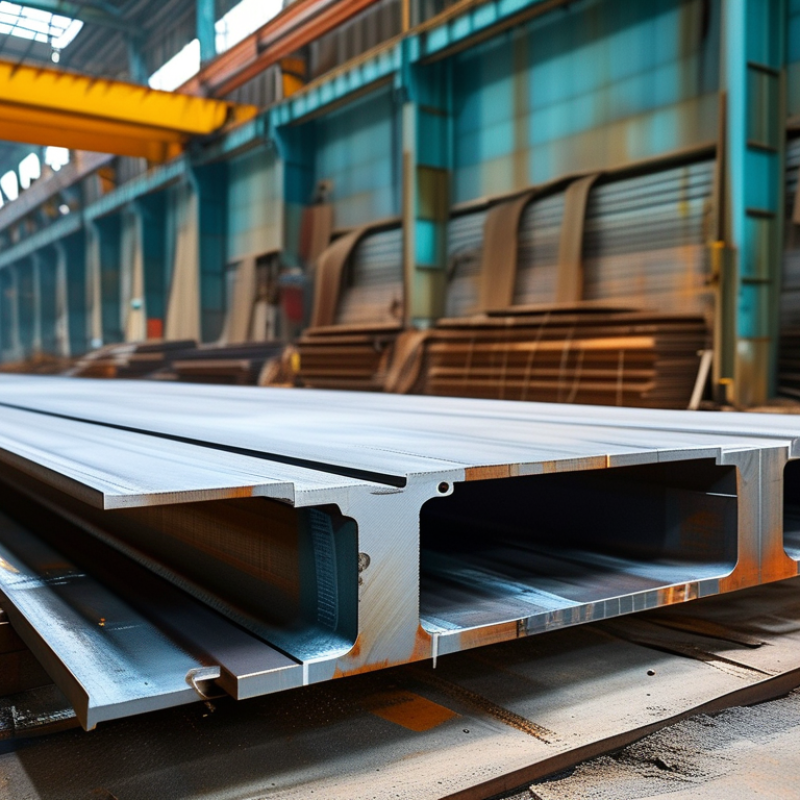
Fabrication suppliers commonly support engineering detailing, material preparation, cutting, forming, welding, surface treatment, inspection, and delivery. The chart compares the minimum specified yield strength of widely used structural steel grades.
Values shown are representative minimum specified yield strengths: ASTM A36: 250 MPa, ASTM A572 Grade 50: 345 MPa, ASTM A992: 345 MPa, ASTM A588 Grade 50: 345 MPa, and EN 10025 S355JR: 355 MPa for products up to 16 mm thick. Actual requirements can vary by product form and thickness.
Engineering & Detailing
Shop drawings, connection details, nesting, and fabrication documentation.
Cutting & Forming
CNC cutting, drilling, beveling, bending, rolling, and plate preparation.
Welding & Assembly
Qualified welding procedures, fit-up, subassemblies, and dimensional control.
Inspection & Finishing
Visual and nondestructive testing, coating preparation, painting, and shipment.
Key Criteria for Evaluating Fabrication Suppliers in 2026
In 2026, structural steel buyers should evaluate fabrication suppliers beyond quoted price.
The World Steel Association forecasts global steel demand at approximately 1.77 billion tonnes in 2025. This scale increases pressure on material availability, scheduling, and quality control. Ask suppliers for mill certificates, heat-number traceability, and documented inspection records.
Capacity must match the project, not merely appear on a website.
Review recent tonnage, maximum plate dimensions, cutting tolerances, welding procedures, and coating facilities. The American Institute of Steel Construction emphasizes documented quality systems and qualified personnel for reliable steel construction. A supplier should also explain how nonconforming parts are isolated and corrected. Small details matter here.
Delivery performance deserves measurable evidence.
Request historical on-time rates, average corrective-action closure times, and a realistic production schedule. The Dodge Construction Network’s 2024 outlook noted continuing volatility in construction costs and project timing. That makes transparent communication essential. A low bid can still be the wrong decision. I would not rely on polished promises alone.
Independent inspection should verify dimensional accuracy, weld quality, coating thickness, and packing protection.
Suppliers following recognized systems such as ISO 9001 can provide stronger process evidence, but certification alone is not proof of daily discipline. Visit the workshop if possible. Look at plate storage, crane maintenance, weld identification, and how workers handle finished members. I have found that imperfect conversations often reveal more than perfect presentations. Ask what failed recently, and what changed afterward.
Leading Supplier Capabilities, Certifications, and Industries Served
The 2026 structural steel and plate fabrication market demands more than cutting capacity. World Steel Association data reports global crude steel production reached about 1.88 billion tonnes in 2024. This scale increases pressure on suppliers to prove consistency, traceability, and delivery control. Qualified fabricators should provide heat numbers, mill test certificates, welding procedure specifications, welder qualifications, and documented non-destructive testing. Small details matter.
Certification should match the project, not decorate a website. ISO 9001 supports controlled quality processes, while ISO 14001 addresses environmental management. EN 1090 supports execution control for structural components, and AWS D1.1 remains widely used for welded steel structures. Independent audits and valid certificates deserve careful checking. A certificate alone cannot correct poor fit-up or careless plate storage. That is the uncomfortable part.
Strong suppliers combine CNC plasma or oxy-fuel cutting, heavy-plate rolling, beveling, submerged-arc welding, blasting, coating, and dimensional inspection. Their teams understand bridge loads, industrial platforms, power facilities, transport structures, and large commercial frames. The International Energy Agency estimates steelmaking creates roughly 7% to 9% of global energy-related carbon emissions, so material yield and scrap control should also be measured. Ask for production records, inspection hold points, coating readings, and realistic capacity by month. Promised capacity can be misleading. Supplier evaluation should include shop visits, sample weld reviews, and a direct conversation with the quality manager.
Comparing Materials, Processes, Lead Times, and Project Support
Choosing the best structural steel and plate fabrication supplier in 2026 requires more than comparing prices. Material selection affects strength, weldability, corrosion performance, and long-term maintenance. Ask whether the supplier can provide certified grades, heat numbers, mill test reports, and full traceability. Plate thickness and surface condition also matter, especially for bridge components, industrial frames, and heavily loaded supports.
Fabrication methods influence accuracy and lead time. Laser cutting suits precise, thinner profiles, while plasma or oxy-fuel cutting may handle thicker plate efficiently. Experienced shops should control bevel angles, heat distortion, weld sequencing, and dimensional tolerances. Request evidence of qualified welding procedures, welder certification, and suitable non-destructive testing. Lead times should include material purchasing, cutting, forming, welding, inspection, coating, and delivery. A short quote can hide a long queue. Project support is equally important. Reliable suppliers review drawings, identify manufacturability risks, and communicate schedule changes before they become costly.
Tips: Compare complete delivery schedules, not only production days. Confirm packaging, lifting points, inspection records, and delivery conditions. Ask for a sample inspection report. It reveals discipline. Also, avoid assuming the cheapest plate is the best value; rework, distortion, or missing documentation can quickly erase savings. No supplier is perfect. Even capable fabricators can underestimate complex assemblies, so allow realistic float for revisions and site measurements. That small allowance often protects the entire project schedule.
How to Select the Right Structural Steel Fabrication Partner
2026 Best Structural Steel and Plate Fabrication Suppliers
How to Select the Right Structural Steel Fabrication Partner
Selecting a structural steel partner requires more than comparing prices. Review their experience with beams, columns, base plates, and welded assemblies. Ask for project photographs, inspection records, and references from similar construction work. A supplier familiar with your material grades can prevent expensive redesigns.
Check their technical controls carefully. Reliable fabricators should provide material traceability, mill certificates, welding procedures, and qualified welder records. Their quality team should inspect dimensions, welds, surface preparation, and coating thickness. Confirm whether they follow the required ASTM, EN, or project-specific standards. Clear documentation matters.
Ask how they manage changing drawings. Good partners confirm revisions before cutting steel. They also explain production capacity, delivery dates, packaging, and site unloading conditions. Visit the workshop if possible. Look for organized steel storage, calibrated measuring tools, and visible safety procedures. Small details reveal working habits.
Do not choose on price alone. A low quotation may exclude testing, coating repairs, or delivery protection. That mistake becomes costly later. I have seen schedules slip because a supplier accepted work without checking plate availability. The better approach is a written review of scope, tolerances, inspection points, and responsibilities. Still, no checklist is perfect. Unexpected delays happen, so honest communication and practical recovery plans remain essential.