How to Choose Faux Stone Panels for Global Projects?
Choosing Faux Stone Panels for global projects requires more than matching color, texture, and price. Performance depends on climate, wall design, transport, and local installation skills. Grand View Research and Fortune Business Insights both report continued growth in manufactured stone and exterior cladding markets. Their findings reflect stronger demand for lightweight, faster-installed alternatives to natural stone.
Yet market growth does not guarantee project success. Panels facing Singapore’s humidity need different detailing than panels exposed to Canadian freeze-thaw cycles. UV resistance matters in Australia. Salt exposure matters near coastal developments. Fire classification matters everywhere, but requirements differ by jurisdiction. ASTM C1780, ASTM E84, EN 13501-1, and local building codes may apply. Confirm the correct standard before approving samples.
Brian Trimble, a masonry veneer technical specialist, has repeatedly emphasized a practical principle: “Adhered veneer is not a waterproofing system.” That warning should guide every specification. A credible supplier should provide test reports, installation details, warranty terms, batch consistency records, and documented support. Ask for corner pieces, not only flat samples. Inspect the back surface, locking system, color variation, and cut edges. Small flaws become expensive on a 20-story façade.
Global procurement also needs realistic thinking. A panel can look premium in a showroom and fail through poor drainage or rushed installation. I would compare full-system performance, not panel price alone. Sometimes the cheaper option is only cheaper at the beginning. Verify assumptions with local engineers, installers, and code consultants before shipment. That extra review may feel slow. It is usually faster than repairing a beautiful wall.
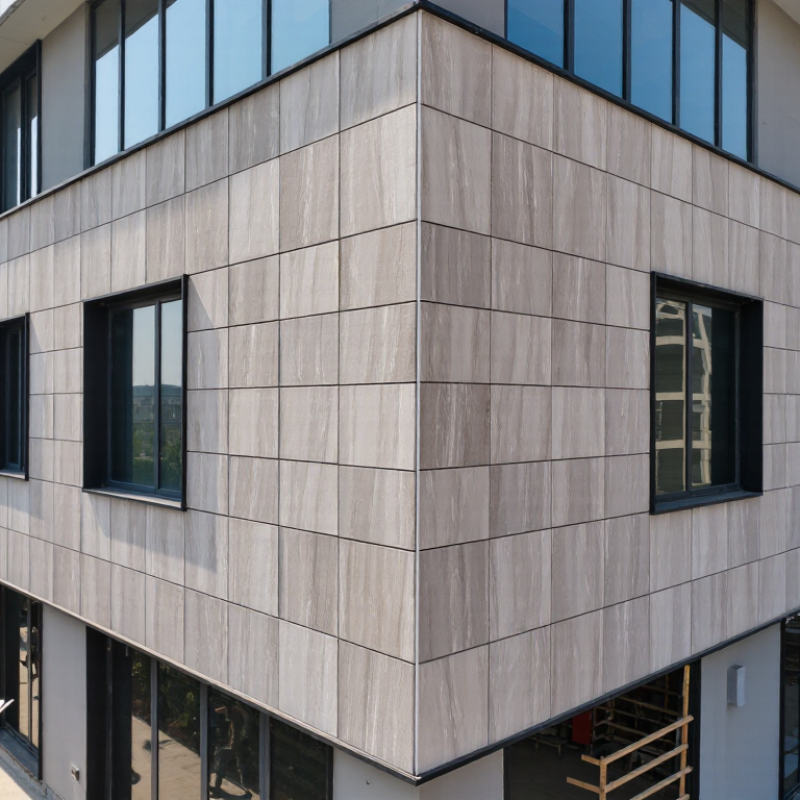
Define Project Requirements and Installation Conditions
How to Choose Faux Stone Panels for Global Projects?
Define the project before comparing colors, textures, or panel prices. Record the building type, wall height, exposure, and expected service life. A seaside hotel faces salt, wind, and constant moisture. A mountain lodge may face freeze-thaw cycles and sudden temperature changes. These conditions affect panel composition, backing systems, sealants, and fixing methods.
Check the substrate carefully. Concrete, masonry, metal framing, and insulated walls require different installation details. Measure wall movement, drainage paths, surface flatness, and ventilation space. Do not assume a dry interior method will work outdoors. Confirm fire performance, water resistance, impact strength, and local building requirements with qualified professionals. Test a sample on the actual wall. It may reveal glare, color variation, or poor joint alignment.
Installation conditions also include labor and logistics. Remote sites may lack cutting tools, trained installers, or protected storage. Panels should arrive dry, labeled, and protected from direct sunlight. Keep fasteners and adhesives compatible with local climate conditions. We once underestimated how quickly open-site dust could contaminate adhesive surfaces. That small oversight caused rework. Allow time for acclimatization and inspect every batch before installation. Local regulations can differ sharply, so project records should include test reports, method statements, and maintenance instructions.
Compare Faux Stone Panel Materials, Textures, and Finishes
Choosing faux stone panels for global projects requires more than matching a showroom sample. Material performance changes with climate, transport, and installation quality. Polyurethane panels are lightweight and easy to cut, which reduces shipping loads and labor. Fiber cement panels offer stronger impact resistance and better dimensional stability. PVC-based options resist moisture, but heat exposure may affect movement and surface appearance. Always verify fire ratings, UV resistance, and freeze-thaw testing for the destination.
Texture strongly influences visual credibility. Deep relief creates convincing shadows on large façades, while shallow texture is easier to clean and install. Irregular edges can resemble hand-laid stone, but they may increase joint work. I once underestimated how much dust collected in deep grooves. That detail looked excellent at first. It later demanded extra maintenance.
Finish selection should respond to light, weather, and project scale. Matte finishes usually hide small scratches and appear more natural. Satin finishes reflect more light and can make darker panels feel polished. Factory-colored surfaces provide consistent batches, while field-applied coatings allow local adjustment but require skilled application. Check color variation under direct sun, cloudy light, and indoor lighting. A sample may mislead. Confirm panel thickness, fastening methods, expansion gaps, and compatible sealants with qualified local professionals. Regional building requirements still matter, even when the panel appears decorative.
Evaluate Climate Resistance, Safety Standards, and Durability
Choosing faux stone panels for global projects requires more than matching color and texture. Climate resistance should guide the specification. In coastal areas, ask for salt-spray and moisture-resistance data. In cold regions, review freeze-thaw performance and expansion behavior. Strong ultraviolet exposure can fade surfaces and weaken coatings over time. Panels should also tolerate daily temperature changes without warping or cracking. I have found that sample testing often reveals problems hidden in product brochures.
Safety documentation deserves equal attention. Request current fire-performance reports, impact ratings, and installation instructions. Confirm that testing matches the destination market and the building’s height, occupancy, and wall assembly. A panel may pass one test but perform differently when installed over insulation or a ventilated cavity. Check reaction to fire, smoke development, and fixing strength. Do not rely on verbal assurances. Keep the records.
Tips: Order samples and expose them to local conditions for several weeks. Inspect color, joints, edges, and surface adhesion. For durability, examine drainage details, sealant compatibility, and mechanical fasteners. Poor installation can shorten service life more than harsh weather. Ask for maintenance intervals and replacement procedures before approving the final design. One detail is easy to miss: dark panels may absorb more heat. That can increase movement and stress. A cautious specification is usually cheaper than a late repair.
Select Suppliers and Plan Quality Control for International Projects
Selecting a faux stone panel supplier for an international project requires more than comparing catalog prices. Review production experience, material consistency, and export records. Ask for recent project references in similar climates. A supplier should provide technical data, installation guidance, and clear product specifications.
Request physical samples from the same production line, not only showroom pieces. Check color variation, panel thickness, corner alignment, surface texture, and backing strength. Test water absorption, freeze-thaw resistance, UV stability, and fire performance where required. Local laboratories or qualified inspection agencies can verify critical results. Keep signed sample approvals and inspection criteria in the purchase contract.
Quality control must continue after approval. Use batch numbers, production photographs, and pre-shipment inspections. Confirm carton strength and pallet protection for long sea journeys. Moisture can damage packaging before panels reach the jobsite. It happens.
Coordinate with the installer before manufacturing begins. Confirm wall conditions, fixing methods, joint sizes, and replacement procedures. Regional temperature changes may affect expansion gaps. A supplier that answers quickly but avoids written evidence deserves caution. We once treated a minor shade difference as acceptable, then discovered it across an entire façade. The correction was expensive. A better plan would define acceptable variation using measured samples, not personal judgment. Reliable suppliers welcome this discipline, even when it slows the order.
How to Choose Faux Stone Panels for Global Projects?
Select suppliers and plan quality control by checking documented fire-performance results before comparing cost, appearance, and lead time.
This chart shows the upper limits commonly used for ASTM E84 interior-finish classifications: Class A permits a Flame Spread Index of 0–25, Class B 26–75, and Class C 76–200. The Smoke Developed Index limit is 450 for these classifications. For international projects, require a current laboratory report that identifies the exact panel construction, substrate, adhesive system, specimen thickness, test method, and production batch. ASTM E84 results should not be treated as equivalent to EN 13501-1, BS 476, or AS/NZS fire classifications; confirm the applicable local code before supplier approval.
Reference: ASTM E84 classification thresholds and project-specific code requirements.